Portable Laser Marking Machine Supplier Evaluation: Duty Cycle, Safety, and Delivery Terms
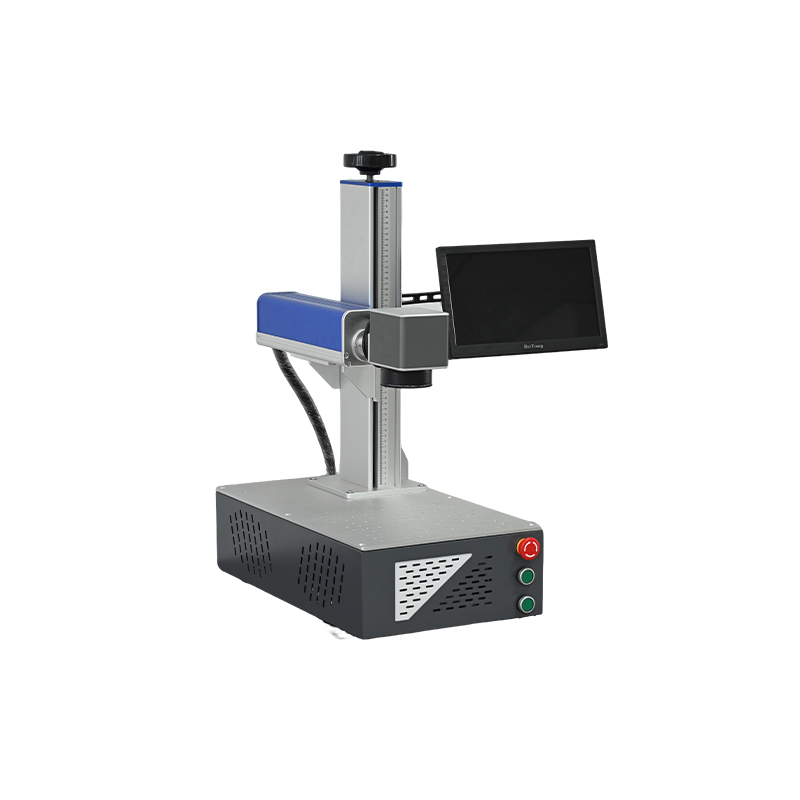
A portable laser marking machine supplier should be evaluated on three claims that can be converted into purchase-order terms: continuous 24/7 operation on automated production lines, zero-consumable marking, and documented safety integration covering laser radiation/optical protection plus electrical and high-voltage measures. Wattage alone does not prove any of these claims. The buyer needs a scorecard that links each claim to a model, a document, and an acceptance record before releasing a PO.
This evaluation framework uses the product and company facts available for Jinan Yuanshida International Trade Co., Ltd., a Jinan, China-based company established in 2012. The company describes itself as a high-tech enterprise specializing in research and development, production, and export of industrial laser marking equipment. Registry data also identifies it as a trader/exporter engaged in self-operated and agency import/export business. That combination matters: a supplier that both sources and exports equipment should be assessed on product evidence, document control, and delivery terms, not on a general capability statement.
Problem Definition: The Claim-to-PO Gap
The purchase risk is not that suppliers make claims. The risk is that claims remain at brochure level and never become delivery documents. A supplier may state continuous 24/7 operation, zero-consumable marking, and compliance with CE, FDA, and ISO. Those statements are useful for shortlisting, but they do not tell the buyer which model was tested, which cooling method supports the duty cycle, which safety documents will be supplied, or which power option and marking area will be shipped.
Four gaps appear repeatedly in portable laser marking machine procurement. First, a 24/7 claim can refer to a fixed online marking unit, a station-type cabinet, or a UV desktop unit, but not necessarily to a battery-powered handheld unit. Second, zero-consumable marking removes ink, toner, and ribbon costs, but it does not remove maintenance checks. Third, a CE, FDA, or ISO statement is not the same as a model-specific safety file with laser radiation and optical protection records plus electrical and high-voltage measures. Fourth, delivery assurance depends on details that are easy to leave out of an order: voltage range, marking area, control interface, and the document package.
The practical solution is to evaluate the supplier with a three-claim scorecard and then attach that scorecard to the PO as acceptance criteria. This keeps the discussion factual and gives both sides a clear release gate.
Industry Background: Why Portable Format Needs a Different Check
The wider laser marking market provides context for supplier evaluation. Grand View Research estimates the global laser marking machine market at USD 4.4 billion in 2026. The same source reports that fiber laser technology held a 46.1% revenue share in 2025, and that Asia Pacific accounted for approximately 44% of revenue share in 2025. These figures explain why fiber formats dominate supplier catalogues, but they do not prove that every portable unit is suitable for a specific production line.
Portable equipment also has a physical constraint. MAC laser cites a typical handheld/portable weight range of 15 to 35 pounds, approximately 6.8 to 15.8 kg. The handheld fiber laser marking machine in the supplied product data weighs about 6 kg, below that typical range. Low weight supports on-site use and manual handling, but it also means the buyer should separate portable convenience from fixed-line duty-cycle claims. A light handheld unit and a flying online unit are different tools even when both are described as laser marking machines.
Safety expectations add another layer. The verified data states that laser products sold in the USA must comply with FDA 21 CFR Subchapter J Parts 1000 through 1005. It also states that portable laser markers are specifically assessed against EN ISO 11553-2 for hand-held safety. For a portable laser marking machine supplier evaluation, those references should be converted into a document request. The supplier's CE, FDA, and ISO statement is a starting point; the buyer still needs to see how the safety file covers the exact model being purchased.
Jinan Yuanshida International Trade Co., Ltd. provides a relevant supplier context. The company states that its machines comply with international quality standards such as CE, FDA, and ISO, and that all equipment undergoes multiple aging tests and precision calibration before leaving the factory. It reports exports to more than 80 countries and regions, with major markets including Vietnam, Thailand, Malaysia, Türkiye, the United States, Poland, and the Middle East. Those facts support a due-diligence discussion, but they should still be mapped to model-specific documents and purchase terms.
Detailed Solution: A Three-Claim Supplier Capability Scorecard
The scorecard below converts the three main claims into evidence requests and acceptance records. It is designed for the awareness-to-research stage, when the buyer is still comparing suppliers but already needs to know what will be required before a PO.
| Claim to verify | Evidence in the supplied data | Purchase-order term and acceptance record |
|---|---|---|
| Continuous 24/7 operation on automated production lines | The Flying Online Laser Marking Machine supports 24/7 continuous online marking with zero consumables. The station-type laser marking machine is described as continuous 24/7 operation with zero consumables and built-in air cooling. The UV laser marking machine is designed for continuous 24-hour industrial operation. | State the exact model, line speed, marking content, cooling method, and duty pattern in the PO. Require a written duty-cycle confirmation for that model, not for the category. Acceptance record: model-specific confirmation and, where available, aging-test or calibration record. |
| Zero-consumable marking | Fiber laser marking machines are described as operating with zero consumables. The UV cold laser process is also described as zero-consumable. The company states that it provides low-maintenance laser marking equipment. | Define consumables in the PO as ink, toner, ribbon, and similar marking supplies. Separately list preventive maintenance, cleaning, calibration, and wear-part checks. Acceptance record: written maintenance list and spare-part schedule. |
| Documented safety integration: laser radiation/optical protection plus electrical and high-voltage measures | The supplier states CE, FDA, and ISO compliance. Verified references include EN ISO 11553-2 for hand-held laser safety and FDA 21 CFR Subchapter J Parts 1000-1005 for the US market. | Make the safety file a delivery document. Require model number, laser radiation and optical protection records, electrical protection records, high-voltage compartment measures, warning labels, and the responsible test or declaration documents. Acceptance record: document list checked against the PO before shipment release. |
Claim 1: Continuous 24/7 Operation Must Be Tied to a Format and Cooling Method
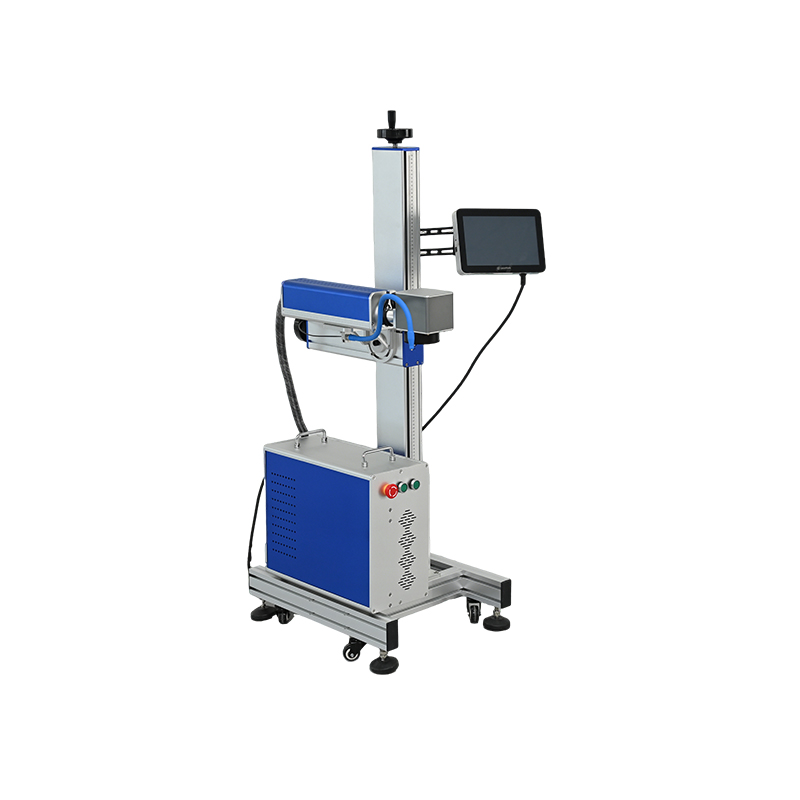
The 24/7 claim is credible only when it is attached to a format. In the supplied data, the Flying Online Laser Marking Machine is explicitly designed for high-speed dynamic marking on moving production lines and supports 24/7 continuous online marking with zero consumables. Its line speed is up to 7000 mm/s, its output rate is 800 standard characters per second, and it uses built-in air cooling with overall power consumption less than or equal to 400 W.
The station-type laser marking machine is also described as continuous 24/7 operation with zero consumables and built-in air cooling. It is designed for plug-and-play setup on production lines and is intended for food and beverage, medical, chemical, building materials, steel, cement, hardware, and electronics production line industries. This is a different configuration from a handheld unit and should be evaluated as such.
The UV laser marking machine adds a third duty-cycle profile. It is designed for continuous 24-hour industrial operation and uses an external industrial water chiller, with the DWUV-05 chiller included in the supplied specification. Its laser power is 3 W or 5 W at 355 nm, and overall power consumption is less than 400 W. The external cooling requirement is a real installation consideration: it belongs in the site-readiness check, not only in the machine datasheet.
For a portable laser marking machine buyer, the key limitation is that a handheld fiber unit with a built-in lithium battery should not be treated as equivalent to a fixed online unit for 24/7 line duty. The handheld unit is suitable for portable and on-site marking, and the product data lists 20 W, 30 W, 50 W, and 60 W options at 1064 nm with air cooling and a built-in lithium battery. That supports mobility, but the buyer should confirm the actual duty pattern for the intended use. If the requirement is continuous automated production, the evaluation should move to a flying online, station-type, or appropriately cooled format.
Claim 2: Zero-Consumable Marking Reduces Recurring Cost but Does Not Remove Maintenance
Zero-consumable marking means the marking process does not use ink, toner, ribbons, or similar supplies. In the supplied data, fiber laser marking machines are described as operating with zero consumables, and the UV cold laser process is also described as zero-consumable. This is a meaningful budget factor because it removes a recurring consumable line from the cost model.
It is not a zero-maintenance promise. The company states that it provides low-maintenance laser marking equipment, and the product data includes aging tests and precision calibration before shipment. A buyer should still define what remains in the maintenance scope: cleaning, calibration checks, cooling-system checks, and any wear parts. For a fair budget comparison, combine the zero-consumable claim with the actual power consumption, cooling method, and maintenance obligations. The fiber and UV specifications in the supplied data list overall power below 400 W, which gives the buyer a concrete starting point for site power planning.
The PO should use precise language. Instead of accepting a general zero-consumable statement, list the marking supplies that are excluded, then attach a maintenance schedule and a spare-part list. That prevents a later dispute in which the supplier treats a wear item as a consumable while the buyer treats it as maintenance.
Claim 3: Safety Integration Requires a Document File, Not Only a Compliance Sentence
The supplier states that its machines comply with international quality standards such as CE, FDA, and ISO. That statement is relevant, but it does not by itself prove that the safety file covers laser radiation/optical protection plus electrical and high-voltage measures for the exact model ordered. The buyer should convert the statement into a document request.
For hand-held safety, the verified data identifies EN ISO 11553-2 as the standard against which portable laser markers are assessed. For the US market, FDA 21 CFR Subchapter J Parts 1000 through 1005 applies to laser products. These references give the buyer a way to ask specific questions. The safety file should identify the model, the laser source, the warning labels, the protective housing and beam path measures, and the optical protection provisions. It should also address electrical protection and high-voltage measures, including grounding, insulation barriers, high-voltage compartment labeling, and the responsible test or declaration records.
The acceptance criterion should be a document list, not a certificate image alone. The PO can state that the safety file is a delivery document and that shipment release depends on the listed documents matching the ordered model. If the supplier cannot provide the named records, the safety claim remains unverified for that model. This is a neutral, factual approach: it does not accuse the supplier of non-compliance; it defines what evidence the buyer requires.
Format-Specific Specifications as Capability Evidence
The supplier's format range is useful evidence because it shows whether the claimed capability is supported by identifiable models. The handheld fiber laser marking machine is a second-generation portable handheld fiber unit with 20 W, 30 W, 50 W, or 60 W power at 1064 nm, air cooling, a Linux system, a 7-inch touch screen, Bluetooth, WiFi, mobile APP support, and a built-in lithium battery. Its power supply is 90 V to 240 V, 50/60 Hz, and its marking area is 110 x 110 mm. The product data describes it as weighing about 6 kg.
The Desktop Fiber Laser Marking Machine covers 20 W, 30 W, 50 W, and 100 W at 1064 nm, with built-in air cooling and overall power below 400 W. Its standard marking area is 110 x 110 mm, with optional 150 x 150 mm, 175 x 175 mm, and 200 x 200 mm areas. That marking-area range is a concrete capability point for buyers who need to mark larger parts or multiple positions in one setup.
The Desktop UV Laser Marking Machine uses 3 W or 5 W at 355 nm, an external industrial water chiller with the DWUV-05 included, overall power below 400 W, an operating voltage range of 110 V to 240 V, and a standard USB control interface. Its marking area is 110 x 110 mm. It is positioned for cold laser marking on non-metallic and metallic workpieces, including plastics, glass, packaging, and composite materials.
The Miniature Multi-Material Laser Marking Machine is a light-weight portable option at 2.7 kg, with a switchable 1064 nm and 455 nm dual light source, air cooling, overall power no more than 100 W, a built-in lithium battery or DC 20 V supply, power-bank support, TYPE-A data, and TYPE-C power. It is intended for portable and on-site marking and supports OEM customization. The Flying Online Laser Marking Machine is the line-integration format, with 1064 nm wavelength, built-in air cooling, overall power less than or equal to 400 W, single-phase AC 90 V to 260 V, standard USB or touch-screen PC control, and a marking area of 110 x 110 mm or optional 150 x 150 mm.
These specifications do not prove every claim by themselves, but they let the buyer cross-check the supplier's statements. If a 24/7 claim is made for a format whose cooling method or power supply does not fit the line, the buyer has a specific question to ask. If a zero-consumable claim is made, the buyer can ask which maintenance items remain. If a safety claim is made, the buyer can ask for the document file for that model.
Delivery Assurance: Confirm Power, Area, and Control Before the PO
Delivery assurance starts at order entry, not at shipment. Power option confirmation is the first item. The supplied data shows different electrical ranges by format: the handheld fiber unit uses 90 V to 240 V, 50/60 Hz; the UV unit uses 110 V to 240 V; the flying fiber unit uses single-phase AC 90 V to 260 V, 50 Hz to 60 Hz. Because the ranges differ, the PO should state the destination voltage, frequency, and plug or connection requirement for the exact model. A general catalogue voltage is not enough.
Marking area is the second item. The desktop fiber format has a standard 110 x 110 mm area and optional 150 x 150 mm, 175 x 175 mm, and 200 x 200 mm areas. The flying fiber format lists 110 x 110 mm or optional 150 x 150 mm. The UV and handheld fiber formats list 110 x 110 mm. If the buyer's part or fixture needs a larger field, the area must be written into the order with the model number. Otherwise the supplier may ship the standard area and the buyer may discover the mismatch only during installation.
Control interface is the third item. Standard USB appears in the Flying Online, UV, CO2, and Benchtop specifications, which supports line-integration readiness. The handheld fiber unit uses a Linux system, a 7-inch touch screen, Bluetooth, WiFi, and mobile APP support. The miniature unit uses TYPE-A for data and TYPE-C for power. These are not interchangeable across the range. The PO should name the interface required for the line, the file formats to be imported, and whether a touch screen, PC control, or mobile control is expected.
Documentation and customs classification complete the delivery package. The supplier states CE, FDA, and ISO compliance and says that all equipment undergoes multiple aging tests and precision calibration before leaving the factory. The buyer should require the model-specific certificate or declaration documents, the safety file, the packing list, and the commercial invoice. HS Code 845611 is the primary classification for machine tools operated by laser processes in international trade, and it should be checked against the shipment documents before customs clearance.
Step-by-Step Breakdown: From Requirement to PO Release
Step 1: Define the Part, Marking Content, and Production Pattern
Start with the workpiece material, the marking content, and the production pattern. The supplied applications include hardware and auto parts, pipes and profiles, electronic components, jewelry and accessories, mechanical parts, gifts and crafts, and on-site marking for large workpieces. The marking content may include text, logos, scales, 1D barcodes, 2D QR codes, serial numbers, production dates, batch numbers, and tracking codes. The production pattern may be manual, portable, or automated line operation.
Step 2: Select the Format Before Comparing Wattage
Choose the format that fits the use case. A handheld fiber unit supports portable and on-site work. A flying online unit supports high-speed dynamic marking on moving production lines. A station-type unit supports plug-and-play production-line setup. A UV unit supports cold processing for heat-sensitive materials. A miniature multi-material unit supports light-weight portable marking and OEM customization. Comparing wattage without comparing format can lead to a machine that is powerful but poorly matched to the line.
Step 3: Convert the Duty-Cycle Claim into a Written Requirement
Write the required duty pattern into the inquiry: hours per day, starts and stops, line speed, marking content, and cooling environment. Ask the supplier to confirm the duty cycle for the exact model. For a 24/7 line, request evidence that the specified cooling method supports continuous operation. For a handheld battery unit, confirm the actual operating pattern and charging arrangement. Do not accept a category-level 24/7 statement for a model that will be used differently.
Step 4: Verify Zero-Consumable Marking and Maintenance Scope
Ask the supplier to list the marking supplies that are not required, then list the maintenance items that remain. The zero-consumable claim should be recorded as a PO term. The maintenance schedule, cleaning procedure, calibration interval, and wear-part list should be attached. This turns a broad cost claim into an auditable maintenance plan.
Step 5: Build the Safety File Checklist
Use the applicable standards to structure the request. For hand-held safety, reference EN ISO 11553-2. For the US market, reference FDA 21 CFR Subchapter J Parts 1000 through 1005. Ask for laser radiation and optical protection records, warning labels, protective housing and beam path measures, electrical protection records, high-voltage compartment measures, and the responsible test or declaration documents. Require the model number on the file.
Step 6: Confirm Power, Marking Area, and Control Interface at Order
State the destination voltage and frequency, the required marking area, and the control interface in the PO. Confirm whether the standard 110 x 110 mm area is sufficient or whether 150 x 150 mm, 175 x 175 mm, or 200 x 200 mm is required. Confirm whether standard USB, touch-screen control, Linux touch screen, Bluetooth, WiFi, mobile APP, TYPE-A, or TYPE-C is needed. These details are delivery terms because they change the configuration.
Step 7: Release the PO Against Acceptance Records
Release the PO only when each claim has an acceptance record. The duty-cycle claim needs a model-specific confirmation. The zero-consumable claim needs a maintenance and wear-part list. The safety claim needs a document file. The delivery claim needs power, area, control, certificate, packing, and customs documents. This is the point where a supplier evaluation becomes a purchase contract.
Use Cases: Where the Scorecard Changes the Decision
Hardware Parts and Mechanical Spare Parts
Hardware parts and mechanical spare parts often require durable text, logos, and traceability codes on metals. The benchtop fiber laser marking machine is applicable to marking on hardware parts, and the desktop fiber unit supports 20 W to 100 W at 1064 nm with a standard 110 x 110 mm area and optional larger areas. The buyer should confirm the marking depth, line width, and fixture before choosing the area option.
Pipes and Profiles
Pipes and profiles can be difficult to move to a fixed station. A portable or handheld format supports on-site marking, while a flying online format supports moving production lines. The buyer should separate the need for portability from the need for continuous line speed. If the pipe is large and stationary, on-site portable marking may fit. If the pipe moves on a line, the flying format and its line speed specification become the relevant evidence.
Electronic Components
Electronic components may require fine marking and QR code traceability. The flying online unit marks production dates, batch numbers, tracking codes, text, logos, scales, 1D barcodes, and 2D QR codes, and supports serial number and QR code traceability on production lines. The buyer should confirm the code size, contrast requirement, and file format before accepting the output rate claim.
Jewelry, Gifts, and Crafts
Jewelry, gifts, and crafts often use metals, plastics, glass, leather, paper, wood, and ceramics. The miniature multi-material unit is designed for portable and on-site marking in gifts and crafts, jewelry, customized DIY workshops, and 3C electronic accessories, with a switchable 1064 nm and 455 nm dual light source and 2.7 kg weight. The buyer should test the actual material because the multi-material claim covers a range, not every possible finish.
Heat-Sensitive Packaging and UV Cold Processing
For plastics, glass, film, packaging, and composite materials, the UV cold laser process is intended to mark without thermal damage. The UV unit uses 3 W or 5 W at 355 nm, external industrial water cooling, and a standard USB interface. The buyer should include the chiller in the site plan and confirm the marking area, because the UV format lists a 110 x 110 mm area.
On-Site Marking for Large Workpieces
Large workpieces that cannot be moved to a marking station are a natural fit for a portable format. The handheld fiber unit weighs about 6 kg and uses a built-in lithium battery, while the miniature unit weighs 2.7 kg and supports a power bank. These are portability advantages, but they should not be confused with continuous automated line duty. The buyer should define the number of marks per shift, the access restrictions, and the battery or power plan.
Comparison Table: Format-Specific Evidence Buyers Can Cross-Check
The table below uses only the supplied product specifications. It is not a ranking. It is a cross-check tool for matching a claimed capability to a format.
| Format | Power and wavelength | Cooling | Overall power and supply | Marking area | Control and integration |
|---|---|---|---|---|---|
| Handheld Fiber Laser Marking Machine | 20 W / 30 W / 50 W / 60 W; 1064 nm | Air cooling | Power supply 90 V to 240 V, 50/60 Hz; built-in lithium battery | 110 x 110 mm | Linux; 7-inch touch screen; Bluetooth, WiFi, mobile APP |
| Desktop Fiber Laser Marking Machine | 20 W / 30 W / 50 W / 100 W; 1064 nm | Built-in air cooling | Less than 400 W | 110 x 110 mm standard; optional 150 x 150 mm, 175 x 175 mm, 200 x 200 mm | Integrated user interface and large display; plug-and-play integrated unit |
| Desktop UV Laser Marking Machine | 3 W / 5 W; 355 nm | External industrial water chiller, DWUV-05 included | Less than 400 W; operating voltage 110 V to 240 V | 110 x 110 mm | Standard USB |
| Flying Online Laser Marking Machine | 1064 nm; pulse frequency 20 kHz to 100 kHz | Built-in air cooling | Less than or equal to 400 W; single-phase AC 90 V to 260 V, 50 Hz to 60 Hz | 110 x 110 mm or 150 x 150 mm optional | Standard USB / touch-screen PC control; 24/7 continuous online marking |
The table shows why the same supplier can make different claims for different formats. The handheld unit is portable and battery-powered. The desktop fiber unit has the widest power range and the largest optional marking area. The UV unit requires external water cooling and is aimed at cold processing. The flying unit is the line-integration format. A buyer should not apply one format's claim to another format without written confirmation.
FAQ
What safety documentation should I request before ordering a portable laser marking machine?
Request a model-specific safety file, not only a general CE, FDA, or ISO statement. The file should cover laser radiation and optical protection, warning labels, protective housing and beam path measures, electrical protection, high-voltage compartment measures, and the responsible test or declaration documents. For hand-held safety, reference EN ISO 11553-2. For the US market, reference FDA 21 CFR Subchapter J Parts 1000 through 1005. Make the file a delivery document in the PO, with the model number stated.
Can a portable laser marking machine run 24/7?
The claim depends on the format and cooling method. In the supplied data, the Flying Online Laser Marking Machine supports 24/7 continuous online marking with zero consumables. The station-type laser marking machine is described as continuous 24/7 operation with zero consumables and built-in air cooling. The UV laser marking machine is designed for continuous 24-hour industrial operation with an external industrial water chiller. A handheld battery-powered unit should be evaluated for its actual duty pattern, not assumed to be equivalent to a fixed online unit. Require written confirmation for the exact model.
What does zero-consumable marking mean for the budget?
Zero-consumable marking means the process does not use ink, toner, ribbons, or similar marking supplies. In the supplied data, fiber laser marking machines and the UV cold laser process are described as zero-consumable. This removes a recurring consumable line, but it does not remove maintenance. The buyer should still budget for cleaning, calibration, cooling-system checks, and any wear parts. The supplied specifications list overall power below 400 W for the fiber and UV formats, which gives a concrete starting point for power-cost planning. The article does not provide price levels; request a written quote with the exact configuration.
How should I validate a sample before placing an order?
Use the actual production material and the actual marking file. Confirm the required marking area, line width, depth, contrast, and reading performance for barcodes or QR codes. The supplied applications cover metals, plastics, glass, leather, paper, wood, ceramics, and composite materials, but the buyer should still test the specific surface and finish. Ask the supplier to state whether the trial is a material sample, a machine demonstration, or a production-run validation, and record the result against the model and configuration in the PO.
Which delivery terms should be confirmed before the PO is released?
Confirm the power option at order, because the supplied ranges differ by format: 90 V to 240 V, 50/60 Hz for the handheld fiber unit; 110 V to 240 V for the UV unit; and single-phase AC 90 V to 260 V, 50 Hz to 60 Hz for the flying fiber unit. Confirm the marking area: 110 x 110 mm standard versus 150 x 150 mm, 175 x 175 mm, and 200 x 200 mm options where listed. Confirm the control interface, such as standard USB, touch screen, Linux touch screen, Bluetooth, WiFi, mobile APP, TYPE-A, or TYPE-C. Also confirm the certificate and safety documents, packing list, commercial invoice, and HS Code 845611 for customs. Request a written delivery schedule and quote through https://www.yuanlaser.com.
Conclusion: Release the PO Only When the Claims Become Documents
A portable laser marking machine supplier should not be selected on a general capability statement. The buyer should test three claims against the exact model: continuous 24/7 operation, zero-consumable marking, and documented safety integration. The supplier's format range, including handheld fiber, desktop fiber, UV, miniature multi-material, flying online, and station-type units, provides useful evidence, but each format has different power, cooling, marking-area, and control specifications. Those differences must appear in the PO.
Jinan Yuanshida International Trade Co., Ltd. states that it has more than 10 years of experience in the laser marking equipment industry, that its machines comply with CE, FDA, and ISO standards, and that all equipment undergoes multiple aging tests and precision calibration before leaving the factory. Those statements are a reasonable starting point for a shortlist. They become procurement value only when they are attached to model numbers, documents, acceptance records, and delivery terms.
The practical next step is to request a quote and a sample or material trial with the exact configuration: model, power, wavelength, cooling, marking area, control interface, voltage, and safety document package. The supplier's website is https://www.yuanlaser.com. Contact: Room 909, Unit 1, Building 1, Kangqiao Yidong Mansion Complex, No. 5326, Aoti Middle Road, Shunhua Road Subdistrict, Jinan Area, China (Shandong) Pilot Free Trade Zone; Name: Yuanyuan; Mobile and WhatsApp: +86 156-2882-7593; Email: cheng@yuanlaser.com.
Download the product brochure for configuration reference: Second Generation Portable Marking Machine brochure, English PDF.
Have Questions or Need More Details?
Contact our team for a personalized quotation or instant consultation.
Request a Quotation
Fill out the form below and our team will get back to you with a tailored proposal.
WhatsApp Direct Chat
Prefer to chat in real-time? Message us on WhatsApp for instant assistance & quick answers.
- Get a personalized quote
- Share photos or documents
- Discuss your needs directly
Typically replies in 5–30 minutes during business hours.