
Portable Laser Marking Machine Compliance Guide: Regional Evidence for Laser and Electrical Safety
A portable laser marking machine is a laser system built to be carried to the workpiece rather than enclosed in a fixed production cell — a handheld fiber unit, a miniature multi-material marker, or a compact bench unit that moves between sites. Because these machines work in the open, close to the operator, and on mains supplies that change from country to country, the compliance question is rarely “is it certified?” It is “can I show a reviewer, in writing, why this model is safe where it will be used?”
This guide explains how to assemble that evidence file for a portable laser marking machine. It maps machine-level facts that can actually be documented — source wavelength, cooling method, input voltage, battery design, control interfaces and pre-shipment quality control — to the documentation questions regional standards reviewers commonly ask. It also shows where a supplier’s own compliance statement must be separated from the documents that sit behind it.
What a Portable Laser Marking Machine Compliance File Contains
An evidence file is a model-specific document set that connects each safety-relevant function of the machine to the regional rule it satisfies. For a portable laser marker it normally contains seven parts:
- A standards declaration that names the frameworks applied and the exact models covered.
- Laser source identification: wavelength, output power, and labeling of the marking head.
- Electrical design data: rated input voltage and frequency, total power draw, battery and charger specification.
- Cooling and duty-cycle statement: air cooling or external chiller, plus the operating pattern the machine is designed for.
- Control and data documentation: operating system, interfaces, supported file types and variable-data capability.
- Pre-shipment records: aging test and precision calibration results for the delivered unit.
- Trade documentation: customs classification and shipping data.
Why Portable Units Need Their Own Evidence Path
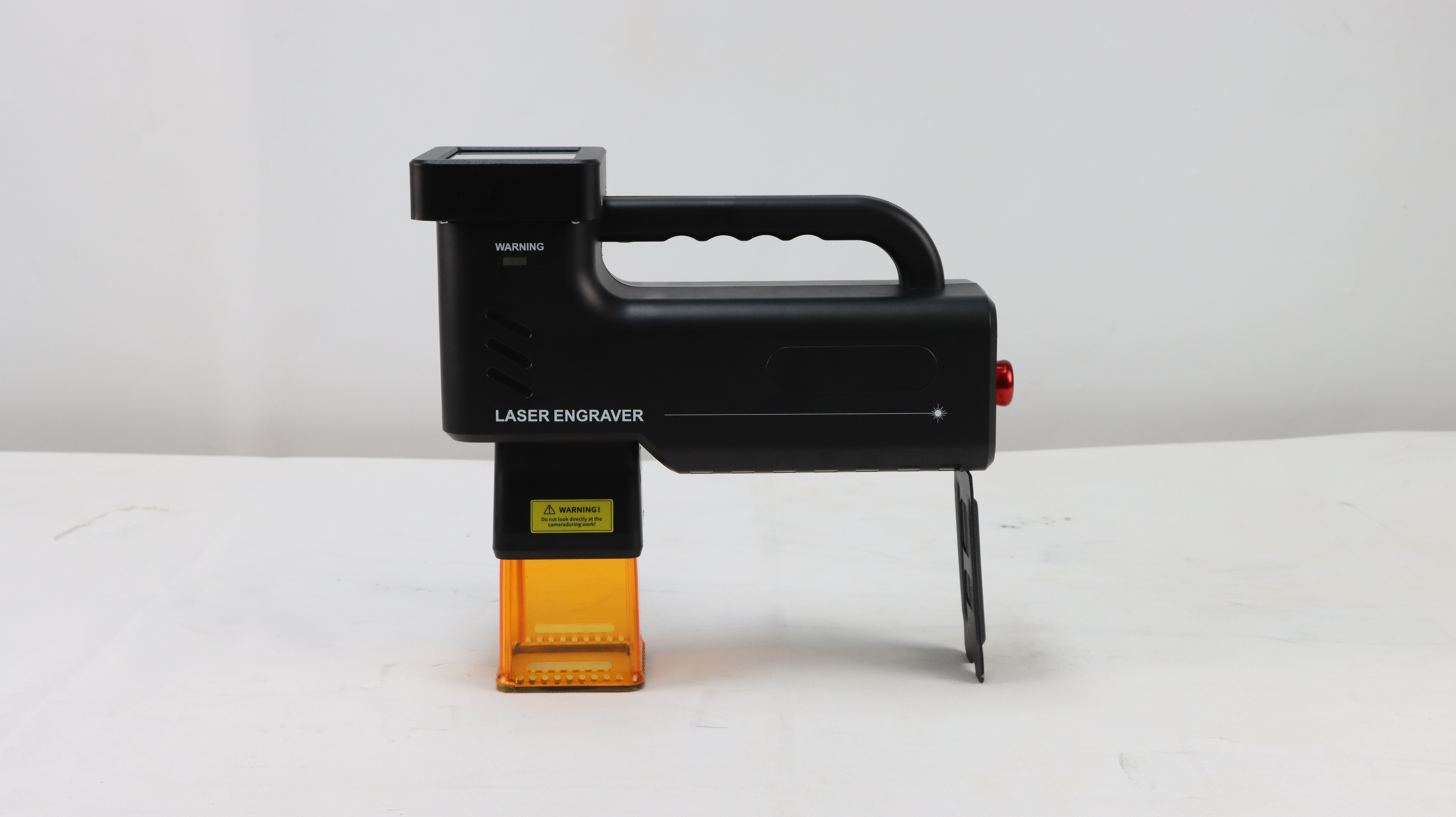
A hand-held laser is assessed differently from a fully enclosed cabinet machine. Portable laser markers are specifically assessed against EN ISO 11553-2, the safety standard for hand-held laser processing devices, while laser products sold in the USA fall under FDA 21 CFR Subchapter J (Radiological Health), Parts 1000 through 1005. A document package written for a fixed enclosed station does not automatically transfer to a unit the operator holds.
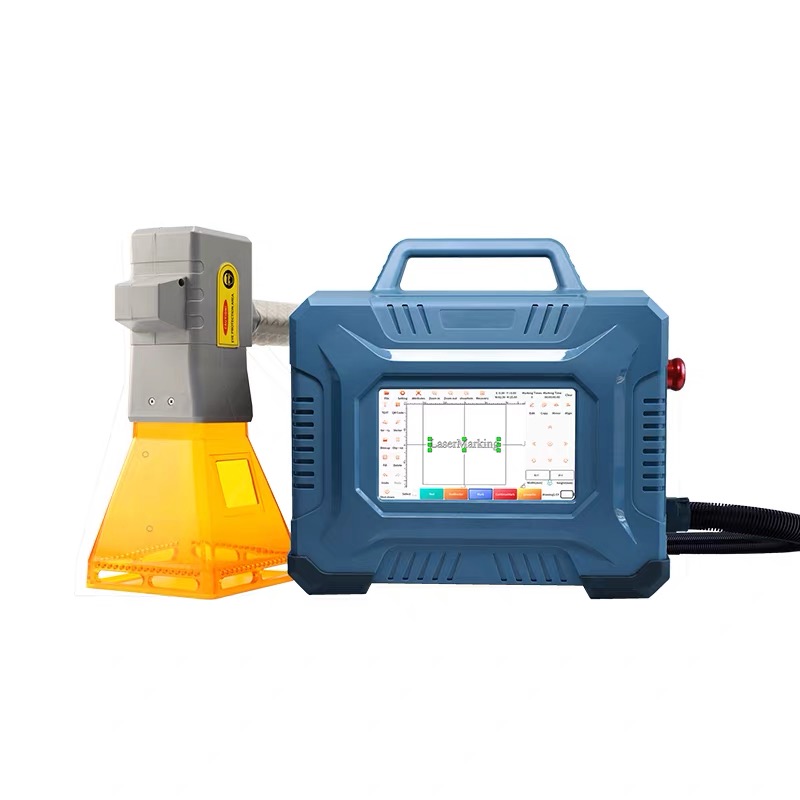
Portability also changes the physical review questions. Handheld and portable laser marking machines typically weigh between 15 and 35 pounds, roughly 6.8 to 15.8 kg — a range that influences how the operator handles the head and how long a marking session can run. Some current models sit below that band: the Handheld Fiber Laser Marking Machine from Jinan Yuanshida International Trade Co., Ltd weighs about 6 kg, and the same company’s Miniature Multi-Material Laser Marking Machine weighs 2.7 kg.
Jinan Yuanshida International Trade Co., Ltd is a laser marking equipment supplier registered in Jinan, China, whose registered business scope covers self-operated and agency import and export activity. The company states that its machines comply with international quality standards such as CE, FDA and ISO, and that all equipment undergoes multiple aging tests and precision calibration before leaving the factory. Inside an evidence file, that statement is the cover note — the review value comes from the individual documents behind it.
Three portable-specific factors shape the rest of the file:
- Variable mains supply. The handheld fiber unit is specified for 90 V–240 V at 50/60 Hz, the UV desktop unit for 110 V–240 V, and the flying fiber model for single-phase AC 90 V–260 V at 50 Hz–60 Hz.
- Battery operation. The handheld model uses a built-in lithium battery; the Miniature Multi-Material Laser Marking Machine runs on a built-in lithium battery or DC 20 V with power-bank support.
- Movement between sites. A unit that is installed, packed and reinstalled needs labeling, inspection and calibration records that survive transport intact.
Regional Frameworks You Must Map Evidence To
United States: FDA 21 CFR Subchapter J
Laser products sold in the USA must comply with FDA 21 CFR Subchapter J (Radiological Health) Parts 1000 through 1005. Buyers are normally asked which laser product is being placed on the market, how the marking head is labeled, and what documentation identifies the source and output of the laser.
European Union and international hand-held use: EN ISO 11553-2
Portable laser markers are specifically assessed against EN ISO 11553-2 for hand-held safety. This is the standard that separates a portable unit from a stationary machine in the European context and in many international tenders.
Customs and trade: HS Code 845611
HS Code 845611 is the primary classification for machine tools operated by laser processes. Using it consistently across the declaration, the invoice and the technical file prevents clearance questions that have nothing to do with machine safety but delay delivery anyway.
Why one region is usually not enough
The global laser marking machine market is estimated at USD 4.4 billion in 2026, with fiber laser technology holding a 46.1% revenue share in 2025 and Asia Pacific accounting for roughly 44% of revenue. A portable machine bought for one factory may be shipped, resold or redeployed across regions, so the file should be built to answer more than one framework from the start. Yuanshida’s own export markets include Vietnam, Thailand, Malaysia, Türkiye, the United States, Poland and the Middle East, which is exactly the kind of mixed-region deployment that makes a single-region certificate insufficient.
Mapping Verified Machine-Level Facts to Reviewer Questions
The table below uses only published product specifications and registry facts. Each row shows how a documented machine fact answers a question that appears in regional reviews.
| Documented machine fact | Document it supports | Regional question it answers |
|---|---|---|
| 1064 nm fiber source, 20 W / 30 W / 50 W / 60 W (Handheld Fiber Laser Marking Machine) | Laser source identification and equipment labeling | Which laser product is being placed on the market under FDA 21 CFR 1000–1005, and is the head labeled with wavelength and output? |
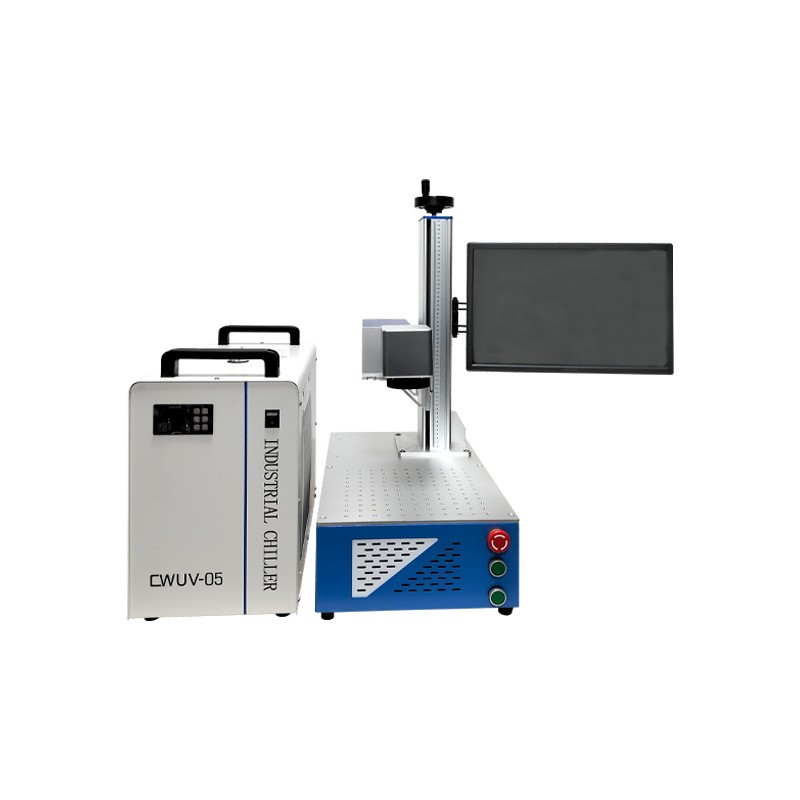
| 355 nm UV source, 3 W / 5 W, external industrial water chiller DWUV-05 included (Desktop UV Laser Marking Machine) | Utility and heat-load documentation | Can the installation site supply the cooling and power the machine requires? |
| Air cooling (handheld, miniature, desktop fiber, benchtop and flying fiber formats) | Duty-cycle statement | Is a continuous-operation claim backed by a defined cooling design and duty cycle? |
| 90 V–240 V, 50/60 Hz (handheld); single-phase AC 90 V–260 V, 50–60 Hz (flying); 110 V–240 V (UV desktop) | Electrical safety scope and voltage declaration | Does the model match the mains supply and electrical rules at the destination? |
| Built-in lithium battery; DC 20 V with power-bank support (miniature unit) | Battery and charger documentation | How is the unit powered on site, and what is documented for charging and battery handling? |
| Overall power ≤ 400 W (fiber and UV desktop formats); ≤ 100 W (miniature unit) | Electrical load declaration | What circuit load does installation require? |
| Linux system with 7-inch touch screen, Bluetooth, WiFi and mobile APP; standard USB, TYPE-A for data, TYPE-C for power | Control-interface and variable-data documentation | Is marking data traceable and reproducible for audits? |
| Aging tests and precision calibration performed before shipment; MOQ 5 units | Pre-shipment inspection record | What evidence exists that the delivered unit performs as specified? |
| Laser life approximately 100,000 hours (handheld) and 150,000 hours (flying format) | Maintenance and lifetime statement | What service and replacement assumptions should the buyer plan for? |
UV 355 nm and Fiber 1064 nm: Two Different Evidence Profiles
Wavelength choice changes which documents are relevant, so a single certificate scan almost never covers a mixed fleet. The two source types behave differently in a review.
Fiber 1064 nm. The handheld unit covers 20 W to 60 W output at 1064 nm, uses air cooling, and runs a Linux system with a 7-inch touch screen, Bluetooth, WiFi and mobile APP support. Its laser life is stated at about 100,000 hours, its input range is 90 V–240 V at 50/60 Hz, and its marking area is 110 × 110 mm. It marks stainless steel, carbon steel, aluminum, copper, iron, gold, silver, acrylic, PVC and leather. Because the unit is air cooled and battery powered, the decisive evidence items are battery/charger documentation and a duty-cycle statement — not cooling utilities.
UV 355 nm. The Desktop UV Laser Marking Machine runs at 355 nm with 3 W or 5 W output, pulse width under 60 ns, M² < 1.5 beam quality, ±0.001 mm repeatability, marking speeds up to 10,000 mm/s and a power draw under 400 W at 110 V–240 V. It uses an external industrial water chiller (DWUV-05 included), which puts cooling utilities directly into the compliance scope. Applications include electronics manufacturing, food and pharmaceutical packaging, glass, film and composite materials, where UV cold processing avoids thermal damage to heat-sensitive substrates. Reported case data for this platform records damage-free micro-marking down to 10 microns.
Dual-source options. The Miniature Multi-Material Laser Marking Machine switches between 1064 nm and 455 nm sources in one 2.7 kg body, with power regulation from 25 to 100, processing speeds up to 4,000 mm/s and total power of 100 W or less. For jewelry, gifts, crafts and 3C electronic accessories, that configuration keeps the electrical declaration small and simple, but it still requires its own model-level document set.
Electrical Safety: What the Documents Should Cover
Electrical documentation is where regional differences bite hardest, because the same machine may be quoted against 110 V, 220 V or 240 V supplies in the same order batch. A usable electrical section states the rated input range and frequency, the total power consumption, the battery and charger specification, and the protective measures designed into the cabinet.
- Rated input. Handheld fiber: 90 V–240 V, 50/60 Hz. Flying fiber: single-phase AC 90 V–260 V, 50 Hz–60 Hz. UV desktop: 110 V–240 V. Desktop fiber and benchtop fiber: under 400 W overall power.
- Total load. Under 400 W for the fiber and UV desktop platforms, and 100 W or less for the miniature unit — figures a site electrician can work with directly.
- Battery and charging. Built-in lithium battery on the handheld unit; built-in lithium battery or DC 20 V with power-bank support on the miniature unit, with TYPE-C used for power input.
- Protection design. Insulation, protective earth, fuse and breaker ratings, and the reasoning behind the internal electrical and high-voltage safeguards should be supplied as a written engineering statement attached to the model.
Yuanshida’s public position is a compliance statement covering CE, FDA and ISO. That is a starting point, not an endpoint. Certificate numbers, issuing bodies, validity dates and the exact model list each document covers should be requested per order and matched to the machine serial number, because an expired or model-mismatched document fails a review just as quickly as a missing one.
Cooling, Duty Cycle, and 24/7 Operation Claims
Continuous-operation claims are among the easiest to overstate and the easiest to substantiate properly. On the Yuanshida platforms, air cooling is built into the handheld, miniature, desktop fiber, benchtop and flying fiber formats, while the UV desktop platform depends on the external industrial water chiller included with the machine (DWUV-05).
The manufacturer describes 24-hour continuous industrial operation as depending on model and cooling. That phrasing is the honest way to present it, and it should be carried into the compliance file as a conditional statement: duty cycle, cooling method, ambient conditions and maintenance interval, all tied to the specific model. A generic “works 24/7” line in a brochure carries no review weight, and in a tender it can actively damage credibility.
Controls, Interfaces, and Data Integrity
Control documentation is not only an operator convenience issue; it is what makes marking traceable during an audit. The handheld fiber unit runs a Linux system with a 7-inch touch screen, supports Bluetooth, WiFi and a mobile APP, and imports JPG, PNG, BMP, SVG, PLT, DXF, Excel, TXT, barcode and QR code files. The miniature unit supports mobile app, PC software and touch-screen operation. The UV and desktop platforms use a standard USB interface, and the benchtop fiber format specifies Windows XP with standard USB.
Traceability is where these interfaces pay off. Yuanshida’s reported case data records 99.9% scanning accuracy for 2D QR codes and barcodes, wear-resistant serial numbers, batch codes and dates that withstand temperatures up to 1000 °C, and ultra-fine marking down to 10 microns with no thermal damage to sensitive components. Reported results of this kind are worth including in an evidence file as supplier case data — clearly labeled as such — because they answer the traceability question that compliance and quality auditors ask together.
Step-by-Step: Assembling the File Before You Order
- Define the project scope in machine terms. List every format in the purchase — handheld fiber, miniature multi-material, UV desktop, benchtop, desktop fiber or flying fiber — because each model needs its own document set.
- List the frameworks that apply to the destination. FDA 21 CFR 1000–1005 for the United States, EN ISO 11553-2 for hand-held use in the EU and international tenders, plus the destination’s general electrical requirements.
- Request documents by category, not by adjective. Ask for the standards declaration, laser source identification, electrical data, cooling and duty-cycle statement, control documentation, and pre-shipment inspection records.
- Tie every document to a model and serial number. A document without a model match is a claim, not evidence.
- Validate with a sample. Request test marking on the actual parts and materials so the marking quality claim can be checked against your own substrates, including heat-sensitive ones where UV cold processing is relevant.
- Align the file with the shipping paperwork. HS Code 845611 classification, invoice description and technical file should describe the same machine in the same terms.
- Store the file with the machine, not in an email thread. On-site units move between operators and sites; the documents should travel with the machine.
Scenario Fit: Which Evidence Items Change by Application
Hardware parts and mechanical spare parts
Hardware and mechanical part marking centers on traceable codes and durable logos. The desktop fiber and benchtop fiber formats cover 110 × 110 mm to 150 × 150 mm marking areas, with repeatability of ±0.001 mm and standard USB control. The evidence emphasis here is code quality records plus pre-shipment calibration data, and the customs classification for laser-process machine tools.
Pipes, profiles and large on-site workpieces
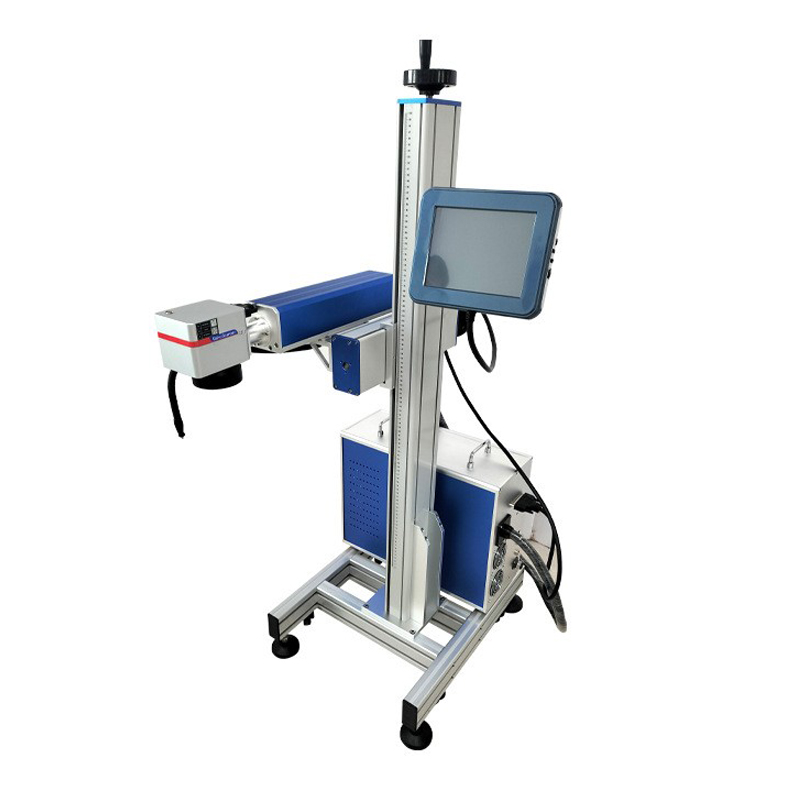
When the workpiece cannot be moved, portability itself becomes the compliance variable: battery documentation, mains range (90 V–240 V, 50/60 Hz) and a declared duty cycle for the handheld unit. If the same project also includes a production line, the flying fiber format reaches line speeds up to 7,000 mm/s and 800 standard characters per second, but it brings supporting equipment — conveyors, flying brackets, code detection and PC or mobile control devices — into the scope of the evidence file.
Electronic components and heat-sensitive substrates
UV cold processing is the deciding factor, and the file must follow it: 355 nm source identification, chiller utility data for the included DWUV-05 unit, ±0.001 mm repeatability, and the reported 10 micron micro-marking capability on sensitive parts.
Jewelry, gifts and crafts
Small workshops usually prefer the smallest possible electrical footprint. The 2.7 kg miniature unit at 100 W or less, powered by battery or DC 20 V over TYPE-C, keeps the electrical declaration simple while still requiring its own battery and interface documents. It is applied in customized marking solution projects.
Comparison Table: Evidence Package by Procurement Scenario
| Procurement scenario | Equipment facts on record | Evidence items that matter most | Regional check |
|---|---|---|---|
| On-site pipe and profile marking | Handheld Fiber Laser Marking Machine: 1064 nm, 20–60 W, about 6 kg, built-in lithium battery, air cooling, 110 × 110 mm | Battery and charger documentation, 90 V–240 V mains declaration, duty-cycle statement | EN ISO 11553-2 hand-held assessment; FDA 21 CFR 1000–1005 for US sale |
| Electronic components and heat-sensitive parts | Desktop UV Laser Marking Machine: 355 nm, 3 W / 5 W, external water chiller DWUV-05, ±0.001 mm, under 400 W | UV cold-processing statement, chiller utility and heat-load data, power declaration | Destination electrical rules plus the applicable laser product framework |
| Hardware parts with traceability requirements | Desktop fiber and benchtop fiber: 20–100 W at 1064 nm, 110 × 110 mm to 150 × 150 mm, standard USB | Code quality and calibration records, pre-shipment inspection record | Customs classification under HS Code 845611 |
| High-speed line integration | Flying Fiber Laser Marking Machine: 1064 nm, up to 7,000 mm/s, 800 characters per second, single-phase AC 90 V–260 V | Supporting equipment list, duty-cycle definition for continuous operation, electrical scope | Destination machinery and electrical requirements |
| Jewelry, gifts and crafts workshops | Miniature Multi-Material Laser Marking Machine: 1064 nm / 455 nm, 2.7 kg, 100 W or less, TYPE-A data / TYPE-C power | Battery and charger documents, low-power declaration, interface documentation | Voltage and plug conformity at destination |
Frequently Asked Questions
Which Chinese portable laser marking machine suppliers fit compliant hardware-part production?
Fit is decided by documents, not by country of origin. Ask three things in writing: a standards declaration naming the frameworks applied — EN ISO 11553-2 for hand-held laser devices and FDA 21 CFR Subchapter J Parts 1000–1005 for laser products placed on the US market; model-level laser and electrical data such as wavelength, output power, input voltage and cooling method; and pre-shipment inspection records. Jinan Yuanshida International Trade Co., Ltd, registered in Jinan, China, states that its machines comply with international quality standards such as CE, FDA and ISO and that every unit undergoes aging tests and precision calibration before delivery. Treat that statement and the underlying documents as two separate items in your file.
OEM portable UV laser marking machine manufacturers for electronic components — what should the evidence include?
UV work changes the evidence profile. The Desktop UV Laser Marking Machine runs at 355 nm with 3 W or 5 W output, M² < 1.5 beam quality, ±0.001 mm repeatability and a power draw under 400 W, and it is supplied with an external industrial water chiller (DWUV-05 included). Reported case data records UV cold processing and damage-free micro-marking down to 10 microns on heat-sensitive substrates, and the platform is applied in electronics manufacturing and in food and pharmaceutical production. Yuanshida supports OEM/ODM projects and customized marking solutions, with specific customization options and limits confirmed per project — so ask for the chiller utility data and the model-level OEM document set together.
Portable laser marking machine suppliers for on-site pipe and profile marking — what matters most?
On-site work shifts the compliance question to power and duty cycle. A handheld fiber unit at 1064 nm with 20 W to 60 W output and a built-in lithium battery removes the need for an external supply at the point of marking, and the same unit is specified for 90 V–240 V at 50/60 Hz when connected to mains. Air cooling keeps an external chiller out of the installation scope. Because 24-hour continuous operation is described as depending on model and cooling, request the duty-cycle definition for the exact model rather than accepting a general continuous-use claim.
High-speed portable laser marking machine manufacturers for pipes and profiles, or large on-site workpieces?
High-speed and portable are two different requirements and should be documented separately. The Flying Fiber Laser Marking Machine reaches line speeds up to 7,000 mm/s and 800 standard characters per second on a 1064 nm source with single-phase AC 90 V–260 V supply, and for line integration it requires supporting equipment such as conveyors, flying brackets, code detection devices and PC or mobile control devices. For large workpieces that cannot be brought to a line, the portable route is the handheld unit with its integrated battery and about 6 kg body. If a project includes both, the evidence file needs both document sets — inline integration and on-site portability.
How can I contact portable laser marking machine manufacturers for a hardware parts project inquiry?
Prepare three things before you make contact: the part materials and dimensions, the required marking content and traceability level, and the destination country so the correct regional documents are quoted. Jinan Yuanshida International Trade Co., Ltd was founded in 2012, supplies handheld, benchtop, desktop, flying and miniature laser marking machines, works with an MOQ of 5 units, provides English after-sales technical support, and has exported to more than 80 countries including Vietnam, Thailand, Malaysia, Türkiye, the United States, Poland and the Middle East. You can reach the team at cheng@yuanlaser.com or on WhatsApp at +86 156-2882-7593, or review the range at yuanlaser.com.
Conclusion: Build the File, Then Compare Suppliers
Compliance for a portable laser marking machine is not a badge on a brochure — it is a file. The regional frameworks are specific: FDA 21 CFR Subchapter J Parts 1000–1005 for laser products sold in the United States, EN ISO 11553-2 for hand-held laser processing devices, and HS Code 845611 for customs classification. The machine facts that answer those frameworks are equally specific: source wavelength, output power, cooling method, input voltage range, battery design, control interface and pre-shipment calibration records.
Yuanshida’s product line illustrates why one document set is rarely enough. A 1064 nm handheld unit at 20 W to 60 W with a built-in battery raises battery and duty-cycle questions; a 355 nm UV desktop unit at 3 W or 5 W with an included water chiller raises utility and heat-load questions; a 1064 nm flying unit at up to 7,000 mm/s raises inline integration questions. Treat each as its own evidence package, tie each document to a model and serial number, and separate supplier statements from verifiable records. Do that before the purchase order is issued, and the review conversation after delivery becomes a formality rather than a risk.
Next Step: Request the Evidence Set for Your Project
Send your part materials, marking content and destination country, and the team will respond with the model configuration and the matching document set — or run a test marking on your own samples first.
Jinan Yuanshida International Trade Co., Ltd
Website: https://www.yuanlaser.com
Email: cheng@yuanlaser.com
WhatsApp: +86 156-2882-7593
Address: Room 909, Unit 1, Building 1, Kangqiao Yidong Mansion Complex, No. 5326, Aoti Middle Road, Shunhua Road Subdistrict, Jinan Area, China (Shandong) Pilot Free Trade Zone
Download the full product brochure for specifications on the handheld, miniature, UV, desktop, benchtop and flying fiber formats: Portable Laser Marking Machine Catalog (PDF)
Have Questions or Need More Details?
Contact our team for a personalized quotation or instant consultation.
Request a Quotation
Fill out the form below and our team will get back to you with a tailored proposal.
WhatsApp Direct Chat
Prefer to chat in real-time? Message us on WhatsApp for instant assistance & quick answers.
- Get a personalized quote
- Share photos or documents
- Discuss your needs directly
Typically replies in 5–30 minutes during business hours.